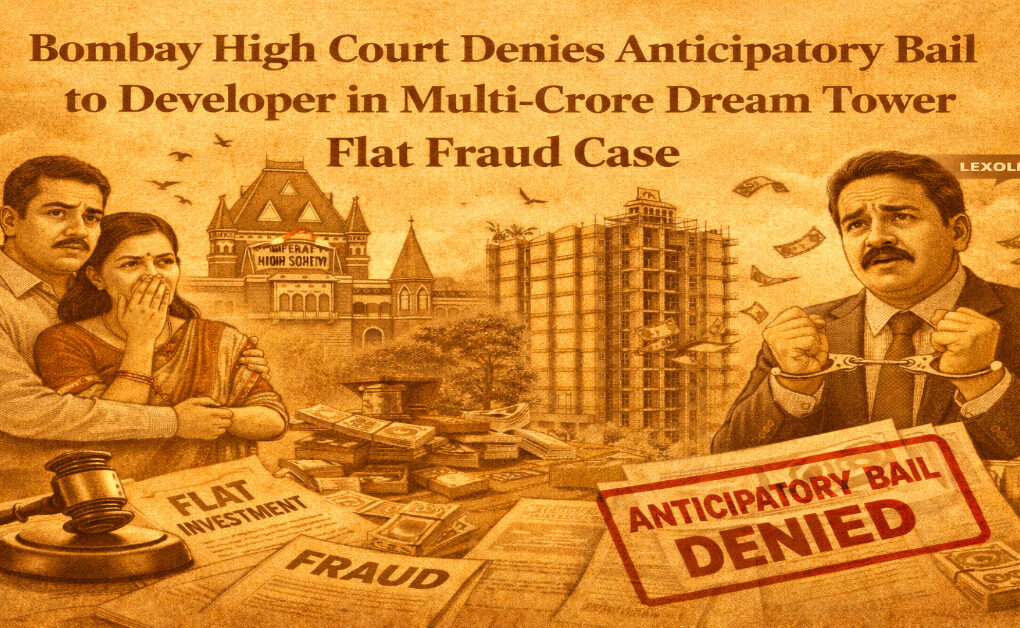
Bombay High Court cites prima facie evidence of cheating, mortgage concealment, and alleged forgery of RERA certificates against builder Mohd Chand Hanif Shaikh. In a ruling that brings relief to 36 flat purchasers allegedly duped by a city-based developer, the Bombay High Court has rejected the anticipatory bail application of builder Mohd Chand Hanif Shaikh, developer of the 'Dream Tower' project, in a case involving cheating, criminal breach of trust, and violations of the Maharashtra Protection of Interest of Depositors Act.
The order, passed by Justice N.R. Borkar on February 17, 2026, comes in Anticipatory Bail Application No. 3101 of 2025, arising from Crime No. 376 of 2023 registered at the Nalasopara Police Station.
The Allegations. It is alleged that six of the flats sold to aggrieved purchasers were mortgaged with a bank against loans availed by the developer, an encumbrance not disclosed to buyers at the time of sale. In what the court described as a prima facie case of cheating, the prosecution alleged a double sale of properties — after executing agreements with the six aggrieved purchasers, the developer allegedly sold the same flats to third parties. Even where purchasers had paid the entire consideration, the developer allegedly refused to hand over possession, instead inducting licensees into those flats after accepting heavy deposits.
Arguments. The defence, represented by advocates Anand Pandey and Deepak Thakur, argued the dispute was purely civil and that custodial interrogation was unnecessary. The State and the first informant's counsel, Aditya R. Mokashi, opposed the plea, pointing out that the applicant had himself executed fresh agreements in favour of all 36 purchasers and had allegedly prepared a forged RERA certificate regarding extension of the project's registration.
Court's Reasoning. Justice Borkar noted that the applicant did not dispute executing agreements of sale in favour of all 36 flat purchasers, nor that six flats sold to purchasers were mortgaged with the bank without disclosure, nor that those six flats were subsequently sold to third parties. “Considering the overall facts and circumstances of the case, I am not inclined to release the applicant on anticipatory bail. The application is rejected,” the order pronounced.
The applicant's counsel then sought two weeks' protection from arrest to approach the Supreme Court, but the court declined this request as well. The decision clears the path for the investigating agency to take coercive steps against the developer, allowing the probe into the alleged multi-crore real estate fraud to proceed.