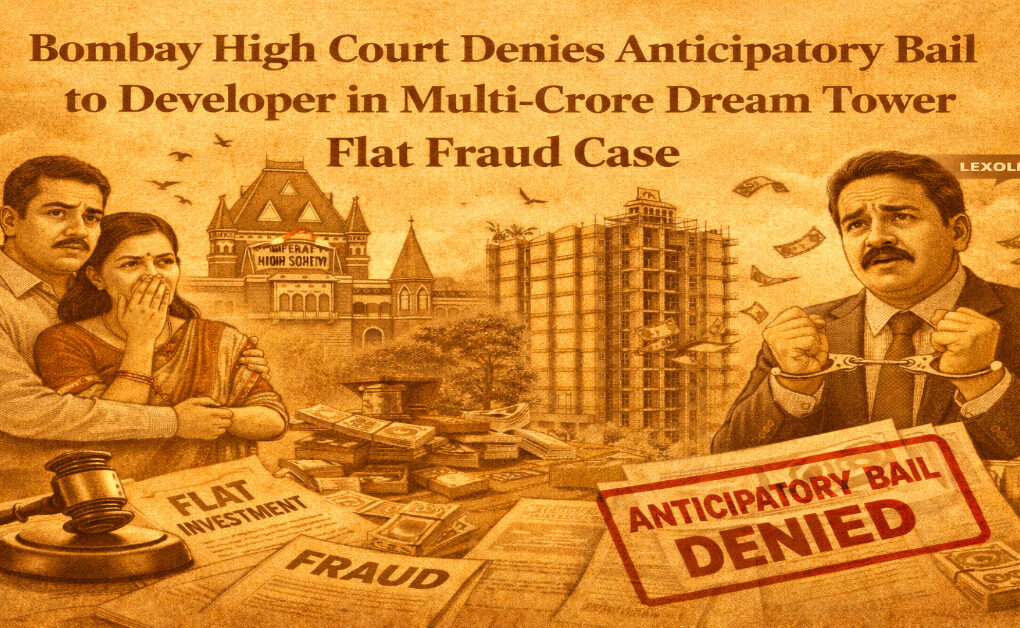
In a ruling underscoring the obligation of public authorities to act with fairness and promptness, the Bombay High Court has quashed an order denying the refund of stamp duty for an unconsummated property transaction that kept the petitioners waiting for nearly a decade. Justice Amit Borkar directed the Maharashtra government to refund Rs. 21 lakhs with accrued interest and issued a mandate for the Revenue Department to establish a uniform, time-bound procedure for such refund applications.
Background. The case, Vidya Omprakash Bhartia & Ors. vs. The State of Maharashtra & Ors., concerned a proposed conveyance deed dated 2005 that was never executed. The petitioners paid the requisite stamp duty, but the transaction never materialised, and they applied for a refund in June 2006. What followed was a nine-year administrative ordeal involving over 25 communications from authorities seeking repeated documentation, before the request was rejected in April 2015 on the ground that the stamp duty had been paid from a company's bank account rather than the petitioners' personal accounts.
Court's Reasoning. Justice Borkar dismantled this reasoning as overly technical, holding that the critical question was identifying “the person who has borne the burden of duty and is entitled to refund,” not the technical source of funds — especially since the company had provided a no-objection certificate and indemnity bond confirming the petitioners as rightful claimants. The court delivered a stern rebuke of the “long and unnecessary delay,” observing: “A public authority must act with fairness and promptness. It must not compel a citizen to run from office to office. The delay is unexplained and shows failure in discharge of statutory duty.” Drawing on the Supreme Court's ruling in Harshit Harish Jain v. State of Maharashtra (2025), the court held the petitioners were entitled to compensation for the state's inaction.
Directions. The court quashed the April 2015 rejection order, directed a refund of ₹21 lakhs with 6% simple interest per annum from the date of the original 2006 application, to be completed within six weeks — with a punitive 12% rate applying to any delay beyond that. It further directed the Principal Secretary of the Revenue Department to issue a circular within eight weeks prescribing a uniform, reasonable time frame for deciding stamp duty refund applications across the state, turning the case into a catalyst for systemic administrative reform.